How Long Do Vehicle Wraps Last? A Guide for Pierce County Fleets
How long do vehicle wraps last? A professionally installed wrap on premium cast film lasts for years on the sides of a vehicle. Leading manufacturers rate their films for up to 8 to 10 years on vertical panels, but only 2 to 3 years on roofs and hoods. Film quality, installation, sun exposure, and care decide where your wrap lands.
We have been making signs in Orting since 1984, and we design, print, and install
vehicle wraps and fleet graphics in our own shop for businesses across Tacoma and Pierce County. Below, we cover what the manufacturer ratings mean, how Western Washington weather affects a wrap, the care habits that protect it, and the signs it is time for a new one.
What Do Wrap Manufacturers Rate Their Films For?
Wrap ratings depend on the film, the color, and which way the surface faces. Vertical panels like doors and box sides last far longer than horizontal surfaces like roofs and hoods.
3M states that its
Wrap Film Series 2080 carries a warranty of up to 8 years on vertical exposure and up to 3 years on horizontal exposure. Avery Dennison's
product data sheet for Supreme Wrapping Film breaks its ratings down by color and finish:
| Film and finish | Vertical surfaces | Horizontal surfaces |
|---|---|---|
| 3M Wrap Film Series 2080 | Up to 8 years | Up to 3 years |
| Avery Dennison SW900, black and white | 12 years | 3 years |
| Avery Dennison SW900, standard colors | 10 years | 2 years |
| Avery Dennison SW900, metallic and pearlescent | 5 years | 2 years |
| Avery Dennison SW900, textured films | 4 years | 1 year |
Treat these numbers as the ceiling, not a promise. They describe the film under good conditions. Printed fleet graphics add ink and a protective laminate to the mix, and the laminate is what shields the print from sun and washing. Real-world life also depends on the install, where the vehicle parks, and how it gets washed.
Why Do the Roof and Hood Wear Out First?
Horizontal surfaces take the sun and weather head-on, so they age faster than the sides of the same vehicle.
The sun hits a roof or hood almost all day, while a door panel catches it at an angle for part of the day. Water, dew, sap, and bird droppings also sit on flat surfaces instead of running off. 3M's maintenance bulletin notes that vinyl graphics, like paint, break down under long sun exposure and air pollution, particularly on the hood, trunk lid, and roof.
On a work van, that often means the sides still look sharp after the roof has started to fade. It is also a good reason to put your logo, phone number, and core services on the side and rear panels. That is where they hold up longest, and where other drivers actually see them in traffic.
How Does Western Washington Weather Affect a Vehicle Wrap?
Our climate is easier on wraps than the hot, sunny Southwest, but constant moisture brings its own wear. Rain itself does not hurt quality vinyl. What rides along with it does.
Avery Dennison shortens its durability ratings for hot, high-sun regions such as Arizona and parts of California, Nevada, Texas, Utah, and Colorado, according to its warranty and durability bulletin. Washington is not among them. Here, the threats are different:
- Road grime. Wet roads throw an oily film onto lower panels, and grit left on a wrap scratches it when it gets wiped.
- Tree sap and needles. Fleets parked under firs and cedars collect sap that bonds to the film if it sits.
- Mildew and pollen. Vehicles that sit in damp, shaded lots collect pollen and mildew, which 3M treats as contaminants to wash off.
- Acidic moisture. 3M advises protecting wrapped vehicles from dew and rain where possible, since they can carry acidic pollutants.
- Summer sun. Long July and August days still bake roofs and hoods, especially on vehicles parked outdoors year-round.
None of this shortens a wrap on its own. Neglect does. A wrap that is washed regularly and parked thoughtfully holds up well in our climate.
How Do You Make a Vehicle Wrap Last Longer?
Gentle, regular washing and quick cleanup of contaminants do more for a wrap's life than anything else you control. 3M's maintenance bulletin for wrap films lays out the basics:
- Wait 72 hours before the first wash. The adhesive needs time to set after installation.
- Hand wash whenever the vehicle looks dirty. Rinse loose grit off first, then wash with a soft, clean cloth or sponge. Dry with a microfiber towel or silicone squeegee to prevent water spots.
- Pressure wash with care. 3M's limits are 1,200 psi or less, a 40 degree or wider nozzle, water no hotter than 140°F, and the nozzle at least 12 inches away and straight on to the surface. Never aim the spray at an edge or seam.
- Clean off sap, droppings, bugs, and fuel quickly. Soften dried spots with hot, soapy water rather than scrubbing. Wipe fuel spills right away, since fuel can degrade the vinyl and adhesive.
- Park under cover when you can. A shop bay, carport, or spot away from trees cuts down on sun, sap, and moisture.
- Skip abrasive polishes and cutting compounds. On matte and textured finishes, skip wax and polish entirely.
- Check the edges after each wash. A lifted edge caught early can often be resealed before water and dirt work underneath.
What Are the Signs a Vehicle Wrap Needs to Be Replaced?
Fading, cracking, and lifting edges are the clearest signs a wrap is near the end of its life. Most show up on the roof and hood first.
Watch for:
- Faded or chalky color. Colors dull, and the surface may look powdery even after a wash.
- Cracking or brittle film. Small cracks tend to show up first on the roof and hood.
- Lifting edges and seams. Look around door handles, wheel wells, and bumper corners.
- New bubbles or wrinkles. These can mean moisture or dirt has worked under the film.
- Browning or discoloration. 3M advises removing graphics right away if they start to discolor or turn brown, to avoid staining the paint underneath.
- Outdated branding. A new phone number, logo, or service line is a common reason to rewrap even when the film is still sound.
Timing matters at removal, too. 3M states that its 2080 film comes off cleanly when it is removed within the warranty period. That is one more reason not to run a wrap long past its rated life.
How Should Business Fleets Plan for Wrap Replacement?
Plan replacements by vehicle age instead of waiting until a wrap looks tired. A fleet looks consistent only when every vehicle is on a schedule.
Wrap Life Check: Sides vs. Roof
Pick a film to compare its rated life on vertical sides and horizontal roofs and hoods.
Film and finishManufacturer ratings for the film itself: 3M Wrap Film Series 2080 warranty periods, and Avery Dennison Supreme Wrapping Film (SW900) Zone 1 durability. They are a ceiling, not a promise. Installation, parking, and washing all affect real-world life.
A few habits make this simple:
- Log each install. Record the vehicle number, install date, and film used so you know which units are due next.
- Inspect at service intervals. Oil changes are a natural time to check roofs, hoods, and edges.
- Replace whole panels or full wraps, not patches. 3M notes that a replaced section can look different from the film around it because of production lot color shifts and normal fading on the older film.
- Keep your approved design file. A rewrap or a new vehicle then matches the rest of the fleet.
- Stagger rewraps. Spreading replacements across several years keeps your fleet sharp without taking every vehicle off the road at once.
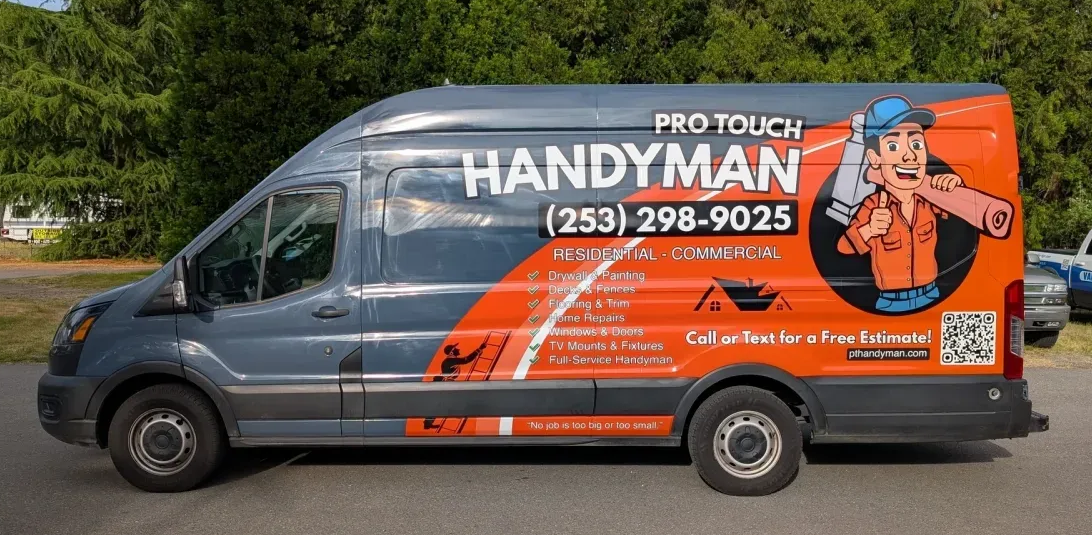
Keep Your Fleet Sharp on the Road
Whether you need a first wrap for one service van or a replacement plan for a full fleet, we handle design, printing, lamination, and installation in our own shop. We work with businesses throughout Tacoma and
Pierce and King County.
Frequently Asked Questions
Can a wrapped vehicle go through an automatic car wash?
A touchless car wash is the safer choice. 3M advises against brush car washes because the brushes can dull and scratch the film and catch a loose edge. Hand washing is still the gentlest option.
Will a wrap stick to a vehicle with peeling paint or rust?
Wrap film is only as secure as the surface under it. Peeling clear coat, rust, or rough body work will not give the film a solid base, and 3M's warranty does not cover paint that pulls away when a wrap is removed. If your vehicle has paint damage, mention it when you request a quote.
Can you put a ceramic coating on a vehicle wrap?
Ask before you apply one. 3M excludes ceramic coatings and other aftermarket additions from its 2080 film warranty, and some protective products can void a film manufacturer's coverage.
Recent Posts